Build the House
A portfolio of complementary, predictable ventures creates A Casa’s own economic base. Useful products and services should sustain the people doing the work and the recurring costs of the House.
Earned income creates continuity.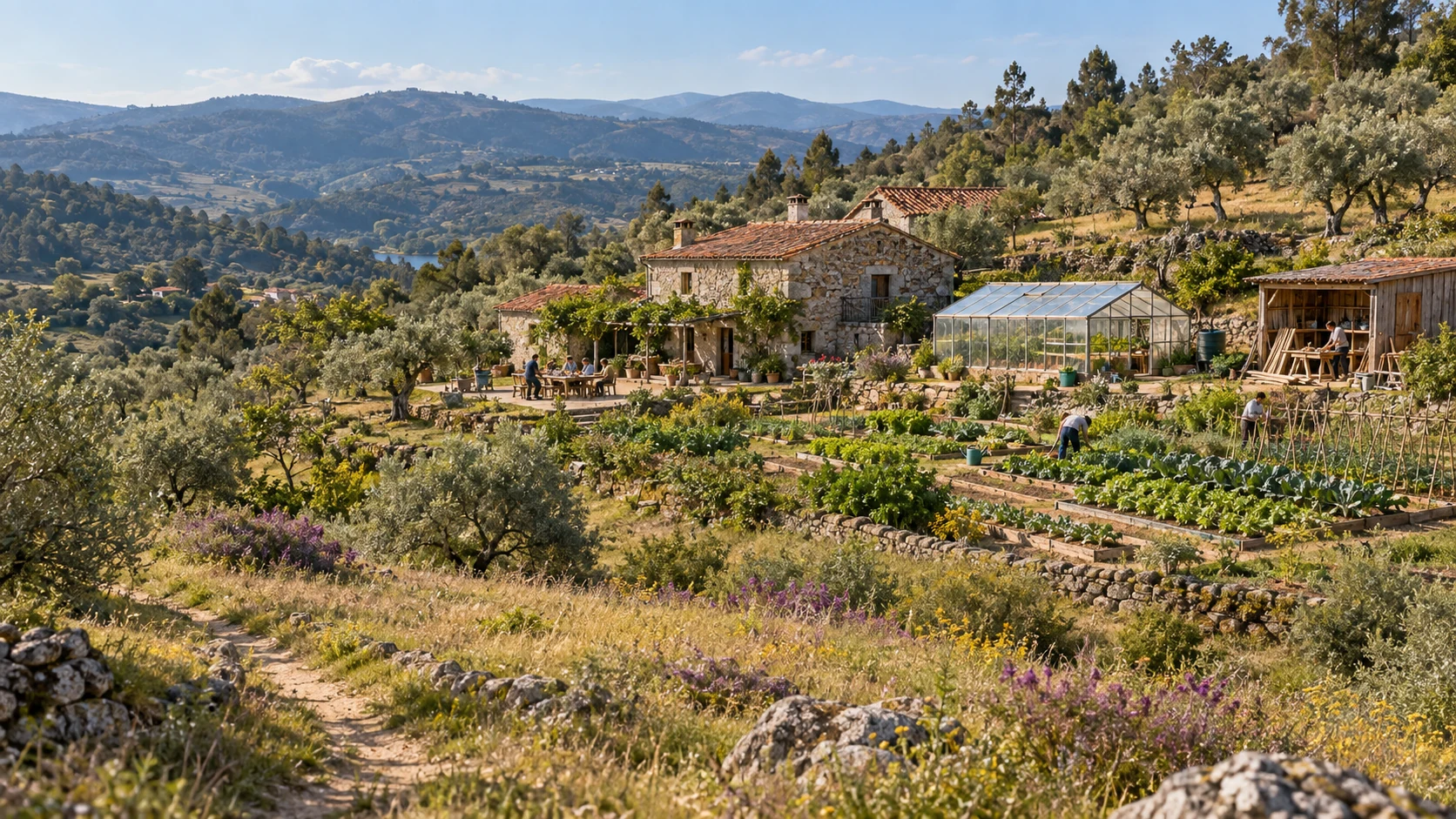
Economy Model
The House develops its own cooperative economic base while helping people establish further viable cooperatives.
The model in one view
We are building a model that is not dependent on the success of its incubated projects, nor permanently reliant on external funding. A Casa develops its own economic base for long-term self-sufficiency, while the ventures it grows (both in-house and incubated) can become Future Funders, helping ensure we can continue creating opportunities for others.
Knowledge, mentoring & agreed contributions return to the commons
A portfolio of complementary, predictable ventures creates A Casa’s own economic base. Useful products and services should sustain the people doing the work and the recurring costs of the House.
Earned income creates continuity.Once that foundation and programme capacity exist, A Casa provides a temporary home and practical sandbox for people to form teams, develop skills and test collective livelihoods.
A stable base creates room to begin.Founding support establishes capacity. Continuing work is intended to cover livelihoods and recurring costs. Further support and agreed alumni contributions can widen access and fund development; the House’s survival should not depend on alumni success.
| Role | What it does | Relationship to the House |
|---|---|---|
| House operating cooperatives | Provide continuing products and services, sustain livelihoods and contribute to shared costs. | Maintain the productive base and offer a real setting for learning. |
| Teams in incubation | Develop an offer, practise delivery, serve customers and establish workable cooperation. | Use agreed facilities and support for a defined development purpose. |
| Independent alumni cooperatives | Run their own enterprise, serve customers and sustain their members. | Operate beyond the House while exchanging knowledge, referrals, teaching and agreed contributions. |
These are roles, not three prescribed legal structures. One operating cooperative could begin with several activities. A team may later develop a separate enterprise. The arrangements follow the people and the work.
Ongoing activities need capable operators and planned handovers. The model cannot assume that residents or founders will fill every gap. What works—and what does not—becomes knowledge others can use.
Each programme needs to identify its available facilities, practitioner time, participant support and funding. Income, costs and the resources available for incubation must be visible. No break-even date or guaranteed revenue is being claimed.
Mature ventures can help the next generation through knowledge, referrals, teaching and agreed financial contributions. The terms must be agreed, and any contribution must be compatible with the venture’s own viability. This strengthens the commons; it is not assumed income required to keep the House alive.
The House’s operating work and incubation both generate methods, tools and evidence. Sharing those lessons is part of the model’s contribution, including when an experiment does not become a business.